Should Parents Have Access to Their Child’s Social Media Debate: Best Arguments, Rebuttals, and Conclusion
Most debates on this topic go wrong in the first minute.
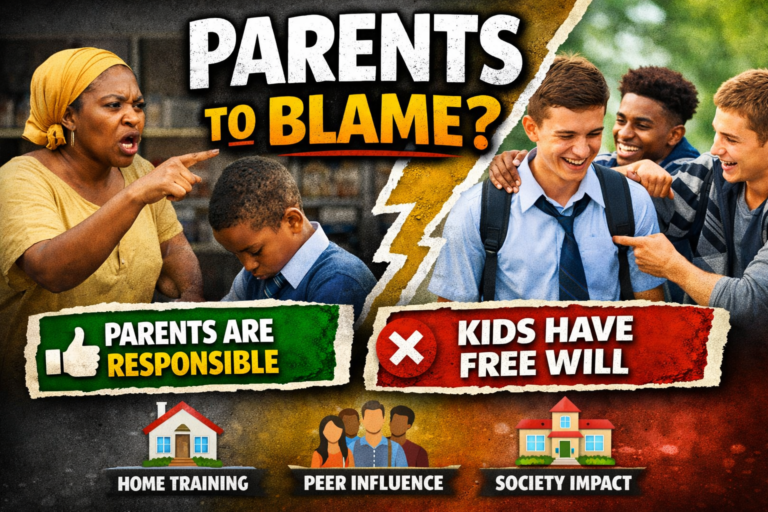
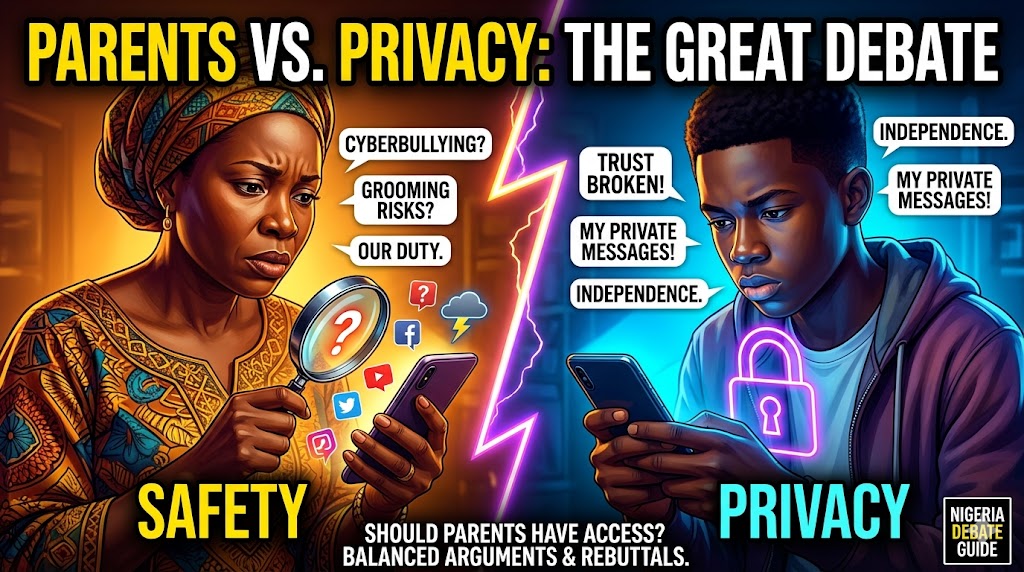
They turn the issue into a cartoon fight: good parents on one side, freedom-loving teenagers on the other. But the real motion is harder than that. The question in the should parents have access to their child’s social media debate is not whether parents care. It is whether access actually protects children better than it harms trust, privacy, and independence.
That is why this motion keeps coming up in schools. Social media is not a small part of modern childhood. One major public-health advisory says social media use among young people is nearly universal, and it also warns that social platforms can bring both benefits and meaningful risks for children and adolescents.
The strongest answer, then, is not a lazy yes or a dramatic no. It is a careful argument about when access helps, when it becomes intrusive, and what kind of parental involvement makes sense.

Table of Contents
ToggleThe motion is really about three things, not one
Before arguing, define the terms.
“Access” can mean several different things. It might mean knowing usernames and passwords. It might mean checking a child’s public posts. It might mean reading private messages. It might mean using parental controls, reviewing privacy settings, or occasionally inspecting an account when there is a serious concern.
Those are not the same thing.
“Child” also matters. A nine-year-old and a seventeen-year-old do not need the same level of supervision. Any strong debate speech should point out that age changes the strength of the argument.
Then there is “social media.” That includes public posting apps, private messaging apps, disappearing-message platforms, gaming chats, and group communities. Some of the greatest risks are not in polished public posts but in private conversations, fake identities, peer pressure, and hidden sharing.
So the motion should not be treated as: “Should parents spy on teenagers forever?”
A smarter version is: “Should parents have some level of access to protect their children online?”
That definition instantly makes the debate more intelligent.
Why the affirmative side sounds morally powerful
The affirmative side begins from duty.
Parents are responsible for their children’s safety. If a child is being bullied, manipulated, threatened, blackmailed, or lured into dangerous behavior online, most people would agree that a parent should not stand aside in the name of privacy.
That instinct is not irrational. It is protective.
A strong affirmative speaker can make four powerful points.
1. Online danger is real, and parents cannot protect what they cannot see
Children do not always report problems early. Some hide them out of fear. Some feel ashamed. Some do not even realize they are being manipulated until the situation becomes serious.
Social media can expose children to cyberbullying, sexual exploitation, scams, fake friendships, body-image pressure, and harmful content. The affirmative side argues that parental access creates an early-warning system. It helps parents notice danger before it becomes damage.
This is where evidence helps. The Surgeon General’s advisory on social media and youth mental health says youth social media use is widespread, that platforms present meaningful risks as well as benefits, and that children and adolescents who spend more than three hours a day on social media face double the risk of mental-health problems such as depression and anxiety symptoms.
That does not prove every child will be harmed. It proves the risk is serious enough that total parental ignorance is not a wise policy.
2. Parents already supervise other risky parts of childhood
Children are not given unlimited freedom in every area of life.
Parents ask where they are going. They know who their friends are. They care about what they watch, where they sleep, and how late they stay out. From the affirmative perspective, social media should not be treated as a magical exception.
If the digital world is part of real life, then parenting should extend into the digital world too.
This point works especially well in school debates because it feels practical. A judge can easily accept the logic that the same parent who protects a child in public should not become blind when the risk moves onto a screen.
3. Access can teach, not just punish
The best affirmative case does not describe parents as police officers. It describes them as guides.
Children often need help understanding privacy settings, scams, fake accounts, manipulative messages, and the long-term consequences of oversharing. Monitoring, when done properly, can become a teaching tool.
UNICEF guidance aimed at digital parenting recommends reviewing privacy and security settings, teaching children safe communication practices, and gradually increasing freedom as they show responsibility. It also stresses that communication should be open and transparent, not secretive.
That supports a strong affirmative line: parental access is not only about catching children doing wrong; it is about helping them learn to stay safe.
4. Younger children are not yet ready for full digital independence
This is one of the cleanest affirmative points.
Even people who defend teenage privacy usually accept that younger children need stronger oversight. A child may be too trusting, too curious, or too eager for attention to judge online danger properly. Predators, scammers, and bullies depend on that immaturity.
So the affirmative side can say: if parents are responsible for minors, and minors are still developing judgment, then reasonable access is part of responsible parenting.
That is a sturdy debate point because it links age, responsibility, and protection in one line of reasoning.
Where the affirmative case becomes weak
The affirmative side is strongest when it argues for reasonable oversight.
It becomes weaker when it argues for unlimited private surveillance.
That is where the negative side comes in.
Why the negative side matters more than many parents admit
The negative case is not “children should be left alone online.”
The real negative case is this: unrestricted parental access can backfire.
Sometimes badly.
1. Privacy is not the same as secrecy
Children, especially teenagers, need some private space to grow.
That does not mean parents should ignore danger. It means a child is not a prisoner whose every message should automatically be read. Friendships, emotions, embarrassing moments, identity questions, and ordinary mistakes are part of development. If parents treat every private conversation as suspicious, they may confuse care with control.
This distinction is powerful in debate. The negative side can say: privacy is a healthy human need, not proof of guilt.
That line is especially effective with older teens. A sixteen-year-old usually expects more dignity than a ten-year-old. If parents ignore that difference, they may damage the relationship they are trying to protect.
2. Secret monitoring can destroy trust
A child who learns that a parent has been secretly reading messages may not become more honest.
They may become more hidden.
They may create second accounts, use disappearing apps, borrow a friend’s device, or stop telling the truth when problems arise. In that case, access produces the opposite of safety. It removes the trust that would have made a child come for help.
This is the negative side’s strongest emotional point: children who feel watched all the time may stop feeling understood.
And once trust is broken, rebuilding it is harder than checking a phone.
3. Constant monitoring can delay maturity
Children do not become responsible by never making decisions. They become responsible by making decisions, facing consequences, and learning judgment.
If parents control every account, every password, every message, and every interaction, they may accidentally prevent the child from developing internal discipline. The child learns obedience when watched, not wisdom when alone.
That is a serious weakness in the surveillance model. Good parenting should prepare a child for adulthood, not permanent inspection.
4. Parents can also misuse access
This point is often ignored, but judges notice it when framed carefully.
Not all parents are calm, fair, or digitally wise. Some overreact. Some embarrass their children publicly. Some invade privacy without clear reason. Some read messages out of curiosity rather than protection.
So the negative side can argue that giving parents broad access without limits assumes parents will always use that power wisely. Real life is not that simple.
A debate becomes stronger when it admits that authority can be misused, even by people who mean well.
The position that usually sounds most convincing
Here is the view that tends to satisfy both logic and common sense:
Parents should have age-appropriate, transparent, limited access to their child’s social media, especially when the child is young or when there are clear safety concerns. But they should not treat permanent, secret, unrestricted surveillance as healthy parenting.
This middle position is not weak. It is usually the smartest one.
Why?
Because it answers the best point from each side.
From the affirmative side, it accepts that danger online is real and that parents cannot act like strangers to their child’s digital life. From the negative side, it accepts that trust, privacy, and gradual independence matter.
In practice, that means a parent might:
- know what platforms a younger child uses
- review privacy settings together
- set rules about strangers, sharing, and screen time
- reserve deeper access for serious concerns, not daily curiosity
- reduce oversight as the child shows maturity
That approach matches practical child-safety guidance better than either extreme. UNICEF Nigeria’s digital-safety advice emphasizes open communication, monitoring with transparency, privacy settings, and age-appropriate freedom.
So if you want a position that sounds reasonable to judges, this is usually it.
How to argue the motion if you are speaking for it
If you are supporting the motion, do not argue for spying.
Argue for protection.
Your framing should sound like this:
Parents should have access because they are legally and morally responsible for their children. Social media exposes children to dangers they may not understand fully. Reasonable access helps parents guide, protect, and educate their children before harm escalates.
Then build around three pillars:
- safety
- responsibility
- guidance
Your best lines will sound stronger if they include limits:
- “We are not saying parents should humiliate children or invade privacy for fun.”
- “We are saying parents should not be locked out of risks that affect their child’s safety.”
- “Access should be proportionate to age and danger.”
That last line matters. It makes the affirmative side sound thoughtful instead of authoritarian.
A simple affirmative claim you can use
“Parents should have access to their child’s social media because protection is part of parenting, and online harm is still harm.”
Clean. Direct. Memorable.
How to argue the motion if you are speaking against it
If you are opposing the motion, do not argue for total freedom without supervision.
Argue against unrestricted access.
That is the sharper position.
Your framing should sound like this:
Children, especially teenagers, need privacy and trust to grow into responsible adults. Parents should guide digital behavior, but routine access to private accounts and messages can damage trust, encourage secrecy, and prevent independence.
Then build around these pillars:
- privacy
- trust
- maturity
Your strongest move is to concede one thing early:
- “Yes, parents should stay involved.”
- “Yes, they should educate and supervise.”
- “But that is different from demanding full access at all times.”
That concession makes your side sound balanced instead of careless.
A simple negative claim you can use
“A child who is constantly watched may become more secretive, not more safe.”
That line lands well because it turns the affirmative side’s logic against itself.
Rebuttals that actually work
A debate on this topic improves when rebuttals are precise.
If the other side says, “Good parents must monitor everything”
You can answer:
“Good parenting is not the same as total control. A child can be protected without losing all privacy.”
If the other side says, “Privacy is dangerous for children”
Answer:
“Privacy is not dangerous by itself. The issue is risk, not ordinary private conversation.”
If the other side says, “Children are too immature to decide”
Answer:
“That may apply more strongly to younger children than older teenagers. A single rule for all ages is too blunt.”
If the other side says, “Monitoring shows love”
Answer:
“Love without trust can become fear. Healthy parenting needs both protection and respect.”
If the other side says, “Parents have a right to know everything”
Answer:
“Rights should be used with purpose and limits. Having authority does not make unlimited surveillance wise.”
The mistake many debate speeches make
They confuse the strongest version of the motion with the most extreme one.
That is a strategic error.
If you support the motion, argue for reasonable access.
If you oppose it, argue against full-time invasion.
The most persuasive speakers do not defend nonsense. They defend the version of the motion a sensible adult could accept.
This matters even more in classrooms, where teachers and judges often reward balance, definition, and practical judgment over loud certainty.
A judge-friendly final position
So, should parents have access?
Yes, but not all access, all the time, for every child, in every situation.
Parents should know the digital world their child lives in. They should help set rules, review privacy settings, watch for danger signs, and step in when risk is real. But they should not assume that love gives them automatic permission to erase a child’s privacy completely.
A younger child may need close monitoring.
An older teenager may need more trust.
A child in danger may justify deeper intervention.
A child showing maturity may deserve more space.
That is not a weak answer. It is the answer that reflects how real families work.
The best response to the should parents have access to their child’s social media debate is not “parents must know nothing” and not “parents must know everything.”
It is this: parents should stay involved enough to protect, wise enough to guide, and restrained enough to preserve trust.
FAQ Section
What is the strongest argument in favor of parents having access to their child’s social media?
The strongest argument is safety. Parents are responsible for protecting children from cyberbullying, grooming, scams, blackmail, and harmful content. If they have no visibility at all, they may miss warning signs until the problem becomes serious.
What is the strongest argument against parents having access?
The strongest argument is that unrestricted access can damage trust and push children into secrecy. A child who feels constantly watched may hide more, communicate less, and avoid asking for help.
Should parents read private messages?
Not as a default habit. Reading private messages all the time can be too intrusive. A more defensible position is that parents may step in when the child is very young, there is clear danger, or there are serious warning signs.
Does age matter in this debate?
Very much. A younger child usually needs more supervision. An older teenager typically needs more privacy and independence. One rigid rule for all ages makes the argument weaker.
How should a student conclude a debate speech on this topic?
End with a balanced judgment. Do not make it sound extreme. A strong closing line is: “Parents should have reasonable, age-appropriate access to protect their children online, but not unlimited secret surveillance that destroys trust.”
Conclusion
In the end, the should parents have access to their child’s social media debate is really a debate about balance. Safety matters. Privacy matters too. The strongest position is not blind freedom and not total control. It is transparent, age-appropriate parental involvement that protects children without turning family life into surveillance.