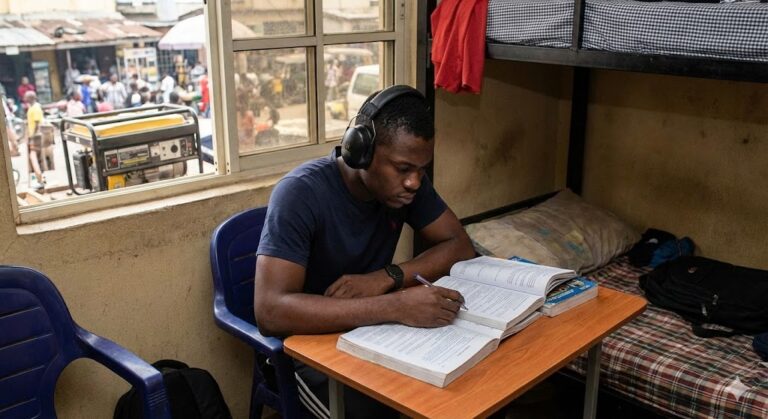
Secrets of First Class Students in Nigerian Universities: 7 Shocking Habits They Hide From You (Exposed)
You look at the notice board, and your heart sinks. You struggled to get a ‘C’, yet that quiet guy who sits at the back and barely talks just scored another ‘A’.
It’s annoying, isn’t it?
You start wondering if they have two heads or if they are using “jazz.” Maybe you tell yourself, “School is a scam,” just to feel better. But deep down, you want that 4.5 CGPA. You want to be the one wearing the academic gown with pride on convocation day, not just an observer.
Here is the hard truth: First Class students aren’t always the smartest people in the room. I’ve seen average students graduate with a 4.8, and I’ve seen geniuses graduate with a 2.2.
The difference? Strategy.
If you want to know the secrets of First Class students in Nigerian universities, you need to stop acting like a regular student. Here is the blueprint they won’t teach you in the lecture hall.

1. They Don’t Play with 100 Level
“I will get serious in 200 level.”
That is the biggest lie Nigerian students tell themselves. First Class is built in Year 1. Why? Because 100-level courses are usually introductory and general. They are the easiest A’s you will ever get.
Once you drop to a 2.5 GPA in your first year, you will spend the remaining three or four years trying to climb out of a hole. But if you start with a 4.5, you have a “buffer.” Even if things get tough in 300 level, your CGPA won’t crash. Top universities like University of Lagos (UNILAG) are notorious for getting harder as you go, so banking those early points is critical.
2. They Study the Lecturer, Not Just the Course
This is the “street smarts” part of university. In Nigeria, academic marking can be subjective. Two lecturers can teach the same course but demand completely different things.
-
Lecturer A might want you to give back exactly what he gave you in his handout (La Cram, La Pour).
-
Lecturer B might hate it when you quote him word-for-word and prefers you to do extra research.
A First Class student figures this out in the first two weeks. They ask seniors, “What does this lecturer like?” If you write a perfect answer but it’s not the style the lecturer wants, you might still get a ‘C’.
3. The Past Question Strategy (The 80/20 Rule)
You might think reading the entire textbook covers-to-cover is the sign of a serious student. Honestly? You’ll just burn out.
Smart students know that 80% of exam questions come from 20% of the course material. And where do you find that 20%? Past Questions.
Nigerian lecturers are busy. They often repeat questions from 3 or 4 years ago. Before you start reading a new topic, check how it was set in previous years. This focuses your energy on what actually matters. Students at Olabisi Onabanjo University (OOU) often swear by this method to survive tough semesters.
4. They Have a “Board of Directors” (Not Just Friends)
Show me your friends, and I’ll tell you your CGPA. If your circle discusses BBNaija, football, and parties 24/7, you are in trouble.
You don’t need to be enemies with “social” people, but your core circle—the people you study with—must be hungry for success. When you are tired and want to sleep, a serious friend will drag you to the library. A unserious friend will tell you, “Man, leave book, let’s go play PS5.”
5. They Don’t Wait for ASUU
The Academic Staff Union of Universities (ASUU) strikes are a painful reality in our federal and state schools.
When a strike happens, the average student throws their books away and starts selling shoes or watching movies. The First Class student? They see an opportunity.
They use that break to cover the syllabus ahead of the class. When school resumes, lecturers often rush to cover lost time, compressing 12 weeks of work into 4 weeks. While everyone else is panicking, the student who read during the strike is relaxed. Keeping up with educational news on platforms like The Guardian Nigeria helps you stay ahead of these disruptions.
6. They Are Consistent, Not Intense
You can’t cheat nature. Reading for 24 hours straight one day before the exam is not studying; it is suicide.
First Class students read a little bit every day. It’s boring. It’s not flashy. But it works. By the time the exam timetable comes out, they are just revising, while you are trying to learn new topics from scratch.
7. They Know When to “Ghost”
University life is fun. There are parties, SUG elections, and department weeks. But there is a time to participate and a time to disappear.
When exams are two weeks away, top students go into “Ghost Mode.” They reduce their social media usage, decline party invites, and practically live in the library or their hostel room. They understand that the pain of discipline is short, but the glory of a good result lasts forever.
Final Thoughts
Getting a First Class isn’t about being a magician. It is about understanding the system you are in.
It requires sacrifice. You might lose some “cool” points. You might miss a few parties. But when you are standing on that podium, or when you are applying for that scholarship abroad, nobody will ask you how many parties you attended.
Start today. Check your notes. Call that serious friend. You can do this.