How to Study for Long Hours Without Sleeping: 7 Powerful Techniques That Actually Work (Stop Dozing Off)
Ever tried to pull a “TDB” (Till Day Break) only to wake up at 6:00 AM with drool on your Chemistry textbook?
We’ve all been there.
The pressure is real. Maybe JAMB is around the corner, or you have a critical semester exam that determines if your GP will fly or sink. You sit down, determined to read for 8 hours straight. But after 45 minutes, your eyes start getting heavy. The words on the page start dancing.
It’s frustrating.
You want to cover the syllabus, but your body is begging for rest.
The good news? You can train your body to stay alert for longer periods. It’s not about magic; it’s about hacking your biology.
Here is how to study for long hours without sleeping, based on what actually works for students.
1. Avoid the “Heavy Swallow” Trap
Let’s be honest with ourselves. You cannot eat a mountain of Eba or Pounded Yam with Egusi soup and expect to stay awake.
It’s biologically impossible.
When you eat heavy carbohydrate meals, your body uses a lot of energy to digest that food. This induces a “food coma.” In Nigeria, we call this the “itis.” Once it hits, no amount of motivation can keep your eyes open.
If you plan to study late into the night:
-
Eat light. Think bread, tea, noodles, or fruits.
-
Eat dinner early, maybe around 7:00 PM.
-
Keep light snacks nearby, like biscuits or groundnuts, just to keep your mouth busy.
2. Get Out of Your Bed
This is the number one mistake most students make.
Your brain is wired to associate your bed with sleep. The moment you get comfortable under that blanket or lean back against your pillow, your brain signals that it’s time to shut down.
You might think, “I’ll just rest my back for five minutes.” Next thing you know, it’s morning.
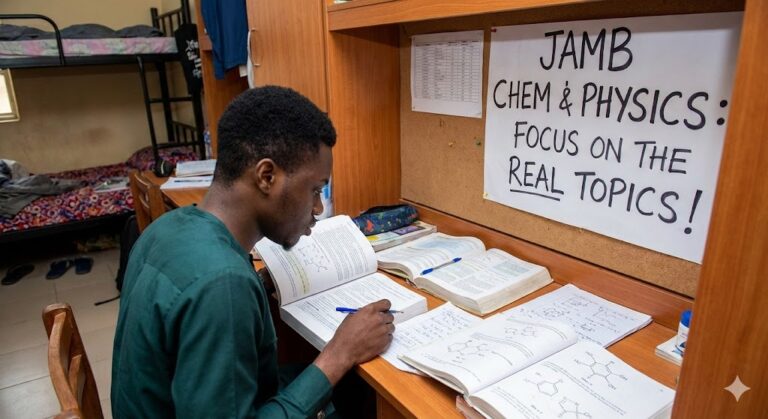
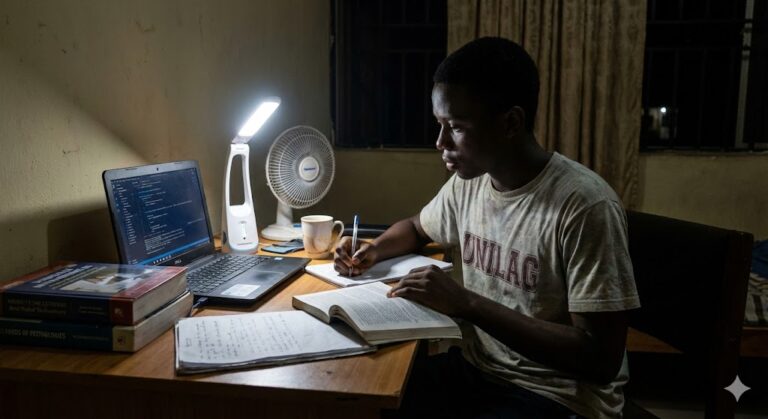
Sit at a proper desk and chair. If you are in a hostel where the room is too cramped or noisy, go to the school library or a study hall. According to research on study environments, sitting upright keeps your nervous system alert.
If you don’t have a desk, even sitting on the floor with your book on a low stool is better than lying on your bed.
3. Don’t Just Read—Do Something
Passive reading is a sleep magnet.
If you are just staring at the pages of your textbook, reading lines over and over, you will drift off. Your brain gets bored.
You need to make studying active. Engage with the material.
-
Write notes: Summarize what you just read in your own words.
-
Solve calculations: If you are a science student, don’t just read the examples. Cover the solution and try to solve it yourself.
-
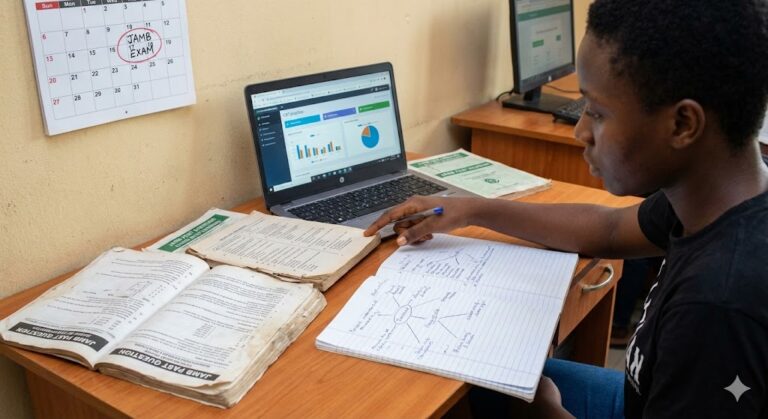
Use Past Questions: This is the secret weapon. Grab a WAEC or JAMB past question booklet. Attempting to answer questions forces your brain to wake up and work.
4. Use the “25-5” Rule (Pomodoro)
You might think you need to study for 6 hours straight to be a “serious student.”
That’s actually a quick way to burn out.
Your focus works like a muscle. If you flex it for too long without resting, it fails. I recommend the Pomodoro technique. It sounds fancy, but it’s simple:
-
Study intensely for 25 to 45 minutes.
-
Take a 5-minute break.
-
Repeat.
During that break, do not pick up your phone to scroll TikTok or Instagram. That’s a distraction trap. Instead, stand up. Stretch. Walk to the window. Wash your face.
This rhythm keeps your mind fresh.
5. Lighting is Everything (Beat the Blackout)
We know the situation with electricity in Nigeria. NEPA (or the DISCOs) can take the light at the worst possible moment.
Reading with a dim candle or a dying torchlight strains your eyes. Eye strain leads to fatigue, and fatigue leads to sleep.
Ensure your study area is brightly lit. White light (like daylight bulbs) is better than yellow light for keeping you awake because it mimics the sun and suppresses melatonin (the sleep hormone).
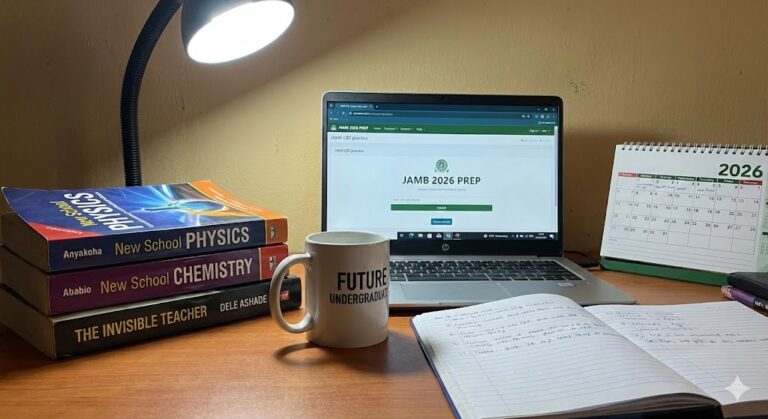
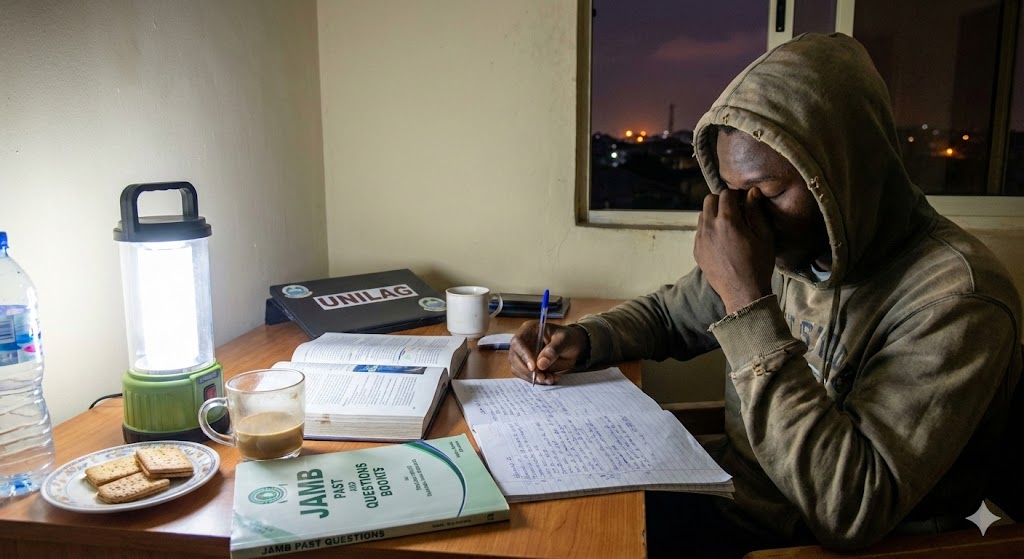
Invest in a good rechargeable lamp. It’s a necessary survival tool for any Nigerian student.
6. Hydration and Caffeine (Use with Caution)
Sometimes, you aren’t sleepy; you’re just dehydrated.
Your brain needs water to function. Keep a bottle of water on your table and sip it regularly. The frequent need to use the bathroom will also force you to stand up and move, which helps fight sleepiness.
Now, about coffee and Kola nut.
Yes, caffeine works. It blocks the chemical in your brain that makes you feel tired. But be careful. If you drink too much energy drink or chew too much Kola nut, you might get the “jitters” (shaking hands) or a racing heart.
According to health experts at Healthline, excessive caffeine can lead to anxiety and huge energy crashes later. Use it as a tool, not food.
7. Find a “Serious” Study Partner
Notice I said “serious.”
Do not go and meet that friend who only wants to gist about football or campus relationships. You need a study partner who is just as terrified of failing as you are.
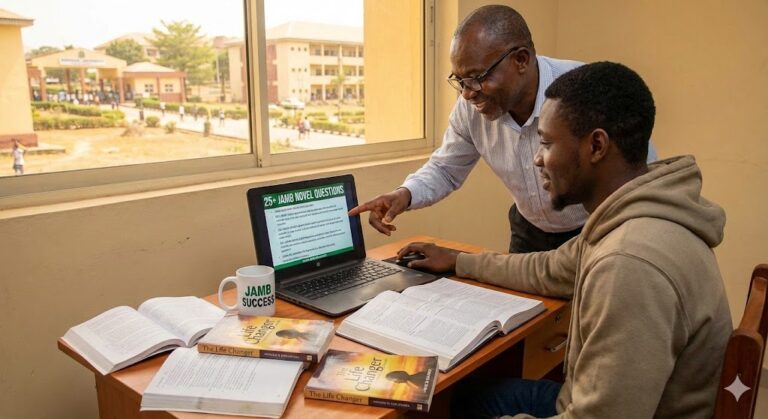
Studying with someone else keeps you accountable. When you feel your head nodding, seeing your friend still writing gives you that extra push to continue. You can also quiz each other. Explaining a concept to someone else is one of the best ways to verify that you actually understand it.
Many top universities, like the University of Lagos (UNILAG), encourage study groups because peer learning improves retention.
Important: The “Zombie” Warning
While these tips help you study longer, please remember that sleep is not your enemy.
Your brain actually moves information from “short-term memory” to “long-term memory” while you sleep. If you pull TDBs every single night, you might find yourself in the exam hall staring at the paper, knowing you read the answer, but unable to remember it. This is called “blanking out.”
Bodies like JAMB test your ability to reason, not just how long you stayed awake.
Try to get at least 4-5 hours of core sleep. Use these tips to maximize your waking hours, not to eliminate sleep completely.
Now, wash your face, grab your book, and go smash that exam. You’ve got this.