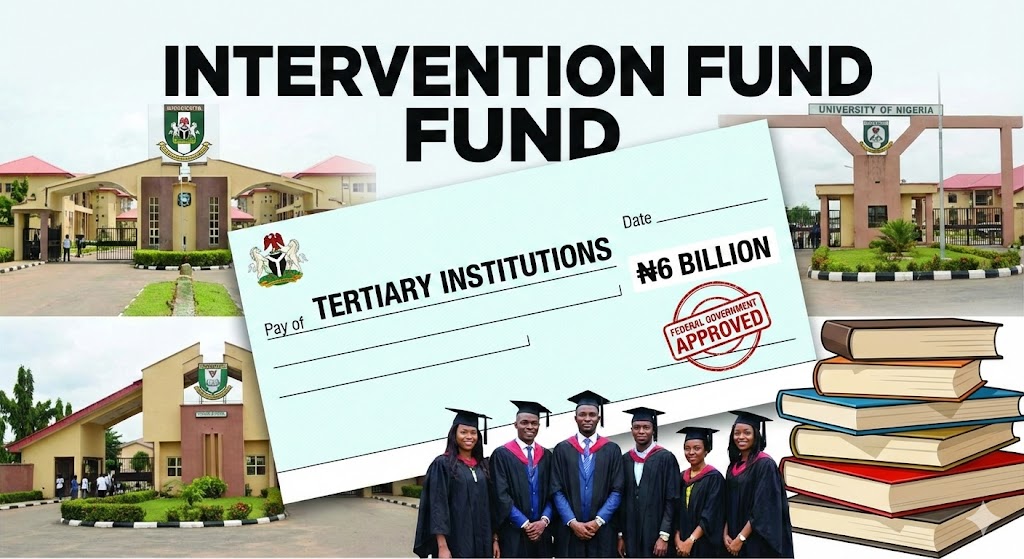
FG Approves ₦6 Billion Intervention Fund for Tertiary Institutions: A Breakdown for Students
The 2026 Allocation: Major Funding Boost Confirmed
The Federal Government has officially greenlit the 2026 disbursement guidelines for public tertiary institutions, unveiling a funding structure that significantly boosts financial support for universities, polytechnics, and colleges of education.
President Bola Tinubu approved the intervention cycle earlier this week.
The headline figure reported across national media is ₦6.45 billion. This amount represents the aggregate of the unit allocation caps for the three categories of tertiary institutions.
Here is the bottom line.
Each specific institution will receive a direct disbursement running into billions of naira. Sonny Echono, the Executive Secretary of the Tertiary Education Trust Fund (TETFund), announced these details at a strategic meeting in Abuja on Tuesday, January 13, 2026. He confirmed that allocation letters have already been distributed to the heads of 271 beneficiary institutions.
The Numbers: Who Gets What?
The 2026 intervention cycle is distinct. It distributes funds based on the type of institution, ensuring equitable access to resources for infrastructure and academic growth.
-
Public Universities: Each university will receive ₦2,525,932,228.02.
-
Polytechnics: Each polytechnic is allocated ₦1,871,059,920.53.
-
Colleges of Education: Each college gets ₦2,056,527,973.04.
These figures are non-negotiable.
The disbursement accounts for 90.75% of the total fund, split between annual direct disbursements and special interventions. This massive injection of capital is designed to tackle the chronic infrastructure deficits that have plagued Nigerian campuses for decades.
Context: Why Now?
Nigeria’s higher education sector has long struggled with funding gaps.
Lecturers strike often. Students complain about dilapidated hostels. Labs lack equipment. The “Renewed Hope Agenda” of the current administration promised to reverse this decay, and this 2026 disbursement is the financial muscle behind that promise.
The approval comes just days after the Federal Government and the Academic Staff Union of Universities (ASUU) reportedly sealed a landmark agreement to end a 16-year renegotiation stalemate. That deal, coupled with this new funding, signals a coordinated effort to stabilize the academic calendar.
The timeline is critical.
The funds are released at the start of the year to allow institutions to plan their procurement processes early. Echono warned heads of institutions that delays in project implementation would no longer be tolerated.
Deep Dive: Where Will the Money Go?
This is not a blank check.
The Federal Government has attached strict conditions to how these billions must be spent. The 2026 guidelines specify key areas of focus:
-
Physical Infrastructure: Construction of new lecture halls and hostels.
-
Research & Innovation: A significant portion is pegged for the National Research Fund.
-
ICT Development: Integration of the Tertiary Education, Research, Applications and Services (TERAS) platform.
-
Security: Upgrading security infrastructure on campuses to ensure student safety.
The NgREN Initiative A standout feature of this year’s intervention is the introduction of the Nigerian Research and Education Network (NgREN). This new line aim to connect Nigerian students and researchers with global academic resources. It effectively digitizes the learning environment.
According to Echono, “The Fund expects better documentation and knowledge of its guidelines… This should mitigate the challenges and problems experienced by scholars.”
Expert Opinions
Stakeholders are cautiously optimistic.
Dr. Tunji Alausa, the Minister of Education, has championed these reforms as a turning point. He noted recently that the administration is “committed to accessible, quality education and uninterrupted academic calendars.”
However, the execution is where the rubber meets the road.
“It is a double-edged sword,” says Chinedu Okeke, a policy analyst in Lagos. “The approval is excellent news, but the history of utilization is poor. Many institutions leave funds sitting in the terrifyingly bureaucratic pipeline while structures rot. The warning from TETFund about ‘unutilized funds’ suggests they are aware of this bottleneck.”
Student union leaders have also weighed in.
Many are demanding transparency. They want to see the money translate into tangible benefits—better Wi-Fi, renovated hostels, and equipped libraries—rather than just administrative overhead.
Future Outlook: What Happens Next?
The money is available now.
Institutions must immediately commence their procurement processes. TETFund has made it clear: future allocations will be performance-based. If a university fails to utilize its 2026 grant effectively, it risks being cut off from the 2027 cycle.
We expect to see a flurry of construction projects launching across campuses by Q2 2026.
Students should monitor their school’s administration. If new projects don’t start appearing within six months, questions must be asked. The Federal Government has done its part by releasing the funds; the responsibility now shifts to the Vice-Chancellors, Rectors, and Provosts to deliver results.