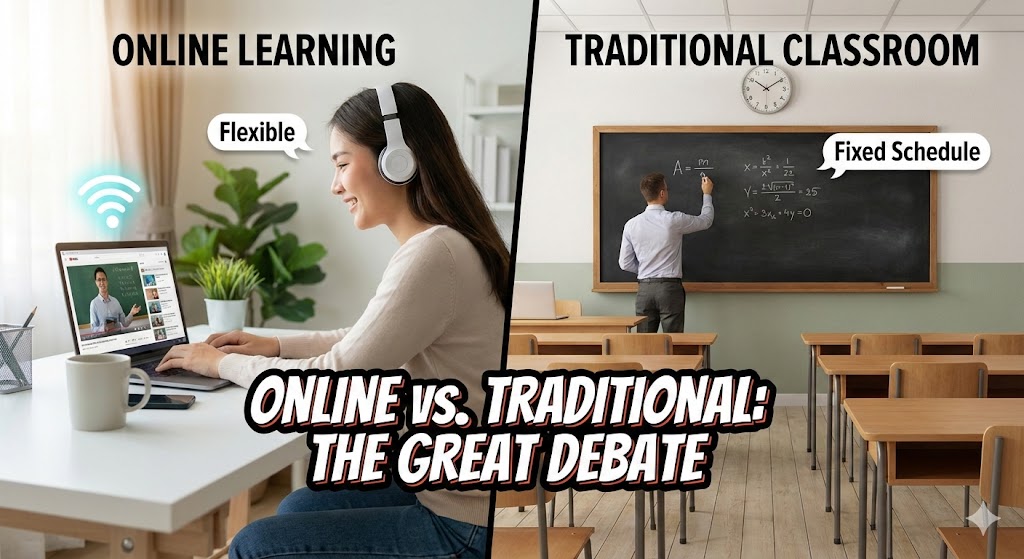
Debate: Online Learning is More Effective Than Traditional Classroom Learning (6 Winning Points)
Debate: Online Learning is More Effective Than Traditional Classroom Learning (6 Winning Points)
Good day, students! Are you preparing to face a panel of judges and a tough opponent? If you are looking for the absolute best points to support the motion that online learning is more effective than traditional classroom learning, you have landed on the right page.
We all know the world is changing. The way we shop, communicate, and work has shifted online. So, why should education be any different?
In this post, I’m giving you a complete, ready-to-use script. These aren’t just random ideas; these are persuasive arguments designed to make your opponent sweat. We are going to define “Online Learning” simply as education that takes place over the internet, usually allowing you to study from home using a device. “Traditional Learning” is the old-school, face-to-face method within the four walls of a school.
Disclaimer: This article provides debate points supporting one specific side of the motion for educational and competition purposes. It does not mean traditional schooling is bad; both methods have their value. The goal here is to help you win your debate.

Winning Debate Points on Why Online Learning is Better
Here are your strong points. When you get to the podium, speak with confidence. Remember, you are trying to convince the audience that the digital way is the superior way.
1. The Power of Self-Paced Learning
Mr. Chairman, Panel of Judges, the first reason I stand before you today is simply this: Control. In a traditional classroom, the teacher drives the bus. If the teacher moves too fast, you get left behind. If they move too slow, you get bored. It’s a “one-size-fits-all” system that doesn’t actually fit anyone perfectly.
But with online learning? I am the driver.
If I don’t understand a math formula, I can pause the video. I can rewind it ten times until it sticks. I don’t have to feel embarrassed raising my hand in a room full of people. Self-paced learning allows students to digest information at their own speed. This creates a deeper understanding of the subject, rather than just memorizing things to pass a test and forgetting them the next day.
2. Flexibility and Convenience
Let’s be honest with ourselves. The stress of waking up by 5:00 AM, fighting for a bus, or trekking long distances just to get to school on time is exhausting. By the time many students sit at their desks, they are already tired.
Online learning removes this unnecessary stress. It offers educational flexibility that traditional schools simply cannot match. I can learn from the comfort of my room, creating a schedule that works for my brain. When a student is well-rested and comfortable, their brain absorbs more information. It’s not about being lazy; it’s about being efficient. Why waste two hours in traffic when those two hours could be spent actually studying?
3. Access to Global Resources
In a traditional village or city school, you are limited to the knowledge of the specific teacher standing in front of you. If that teacher confuses you, or doesn’t know the topic well, you are stuck. You have no other option.
Online learning breaks these walls down. Suddenly, the world is my classroom. Through the internet, I have access to the best tutors from London, Lagos, or New York. I can watch documentaries, use interactive apps, and access libraries that are bigger than any physical school building.
In fact, [according to the World Economic Forum], the integration of digital technology in education is crucial for preparing students for the modern workforce. We are not just learning a subject; we are learning how to find information globally. That is true power.
4. Safety and Reduced Distractions
We cannot ignore the reality of safety. Traditional schools can sometimes be hubs for bullying, peer pressure, and distractions. How many times have you lost focus because a classmate was making noise, or because you were worried about a bully during break time?
Online learning provides a controlled, safe environment.
When I log into my virtual learning environment, it’s just me and the material. The social drama is cut out. I can focus entirely on my academic performance without the fear of harassment or the distraction of noisy classmates. For many students who struggle with social anxiety, online learning is more effective than traditional classroom learning because it gives them the peace of mind they need to actually think.
5. Developing Essential Tech Skills (Digital Literacy)
Here is the hard truth: The future of work is digital. When we leave school and look for jobs, employers won’t ask if we can sit quietly in a row of desks. They will ask if we can use computers, manage our time remotely, and communicate online.
By engaging in online learning, I am automatically building digital literacy. I am learning how to send professional emails, how to use video conferencing tools, and how to troubleshoot technical issues. A student in a traditional classroom might write notes with a pen and paper, but an online student is already practicing the skills they will use in their future careers. We are killing two birds with one stone.
6. Better Retention Rates
My final point is about results. You might think traditional class is better for memory, but data suggests otherwise. Because online learning uses multimedia—videos, quizzes, interactive charts—it engages more of our senses.
It is scientifically proven that we remember visuals better than just listening to a teacher talk for 45 minutes. When we enjoy the process, we retain the information. The Research Institute of America has stated that e-learning can increase retention rates by 25% to 60%. That is a massive difference. Clearly, online learning is more effective than traditional classroom learning when it comes to actually remembering what you were taught.
Frequently Asked Questions (FAQs)
Q: Isn’t online learning bad for social skills? A: Not necessarily. While you aren’t physically with friends, online learning teaches you digital social skills, which are just as important today. You learn to collaborate in chat rooms, forums, and video calls. Plus, you can still see your friends after school hours!
Q: What if I get distracted easily at home? A: That’s a valid fear, but it’s also a chance to learn discipline. Traditional school forces you to sit still; online learning teaches you self-discipline, which is a skill you need for university and adulthood.
Q: Is online learning cheaper? A: Generally, yes. You save money on transport, school uniforms, and expensive textbooks (since many resources are digital). It is often a more cost-effective option for parents.
Conclusion
To sum it all up, the world is moving forward, not backward. While the traditional classroom has been around for centuries, it is starting to show its age.
The flexibility, the access to global knowledge, the safety, and the crucial tech skills we gain make it clear that the digital path is the winner here. By allowing students to learn at their own pace in a comfortable environment, we are setting them up for real success.
Disclaimer: Once again, this article is for educational debates. Teachers and physical schools are vital to our society. This post simply outlines the strong arguments for the motion that online learning is more effective than traditional classroom learning to help you win your competition.
What do you think? Do you agree that the internet is the best classroom? Drop your opinions in the comments section below… Also, feel free to share this post with your coursemates or those in your team!