Debate: Corporal Punishment Should Be Abolished (6 Winning Points)
Debate: Corporal Punishment Should Be Abolished (6 Winning Points)
Good day, students! Looking for the winning points for your next debate? You’ve come to the right place.
The topic of flogging in schools is one of the most heated arguments in Nigeria today. Some people believe “spare the rod and spoil the child,” but the world is changing. If you are standing before a panel of judges to argue that Corporal Punishment Should Be Abolished, you need more than just emotions. You need cold, hard facts.
I’m here to give you the exact script to win this round. We are going to prove that hitting students does more harm than good.
First, let’s look at the definitions. Corporal punishment refers to the use of physical force intended to cause some degree of pain or discomfort—like flogging, kneeling, or slapping—as a form of discipline. To abolish means to officially put an end to it.
Disclaimer: This article provides debate points supporting the motion that corporal punishment should be abolished. This is for educational and debating purposes only and is not meant to undermine school authority figures.

Winning Debate Points on Why Corporal Punishment Should Be Abolished
Here are 6 solid points you can copy, adapt, and use to convince your judges and audience.
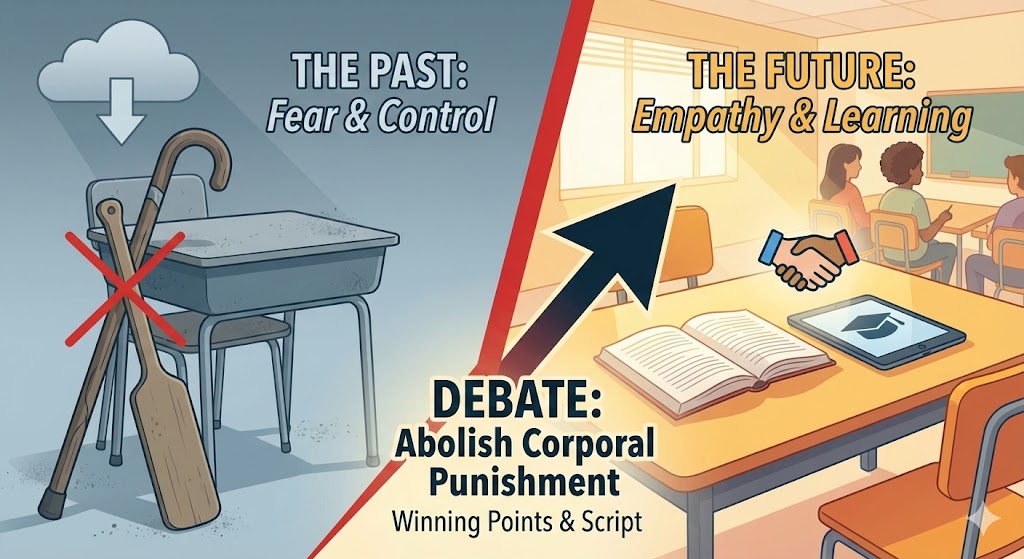
1. It Creates Fear, Not Respect
My first point is about the atmosphere in our classrooms. We often confuse fear with respect. When a teacher walks in with a cane, students keep quiet. But are they learning? No. They are terrified.
The truth is, corporal punishment should be abolished because it destroys the student-teacher relationship. A student who is afraid of being beaten will never ask questions when they are confused. They will hide their mistakes instead of learning from them. Education thrives on curiosity, not fear. If I am shaking because of the cane on your table, my brain shuts down. I can’t learn, and that defeats the whole purpose of school.
2. It Breeds Aggression and Violence
Let’s look at the psychological effect. Children are great imitators. When an adult—a role model—solves a problem by hitting, what lesson are they teaching? They are teaching that “might makes right.”
This creates a culture of violence. The bullied student becomes the bully. [According to a report by UNICEF on violence against children], physical punishment significantly increases the likelihood of a child becoming aggressive later in life. We are essentially training the next generation to use their fists instead of their words. If we want a peaceful society, we have to start by removing violence from our classrooms.
3. The Risk of Physical Injury
We have all heard the horror stories. A teacher tries to correct a student, anger takes over, and things go too far. Students have suffered from damaged eardrums, broken bones, and even permanent disabilities just because a teacher wanted to “discipline” them.
Is a missing assignment worth a hospital visit? Absolutely not. Teachers are human beings; they have bad days and mood swings. Allowing corporal punishment gives them a weapon to use when they are frustrated. The risk of physical abuse disguised as discipline is too high. The only way to ensure safety is to take the weapon away entirely.
4. It Damages Mental Health and Self-Esteem
The scars left by corporal punishment aren’t always visible. Many students suffer from psychological trauma, anxiety, and depression because of harsh punishments.
Imagine the humiliation of being flogged in front of the whole assembly. It crushes a student’s self-esteem. It makes them feel worthless. A child with low self-confidence cannot perform well academically. If we care about the mental well-being of the Nigerian child, we must agree that corporal punishment should be abolished. We should be building students up, not beating them down.
5. Better Alternatives Exist (Positive Discipline)
My opponents might ask, “If we don’t beat them, how do we correct them?” This is a lazy argument. There are better ways. We call it positive discipline.
Counselling, withdrawal of privileges, detention, and guidance are far more effective. These methods teach a child why what they did was wrong. Flogging only teaches a child to avoid getting caught. We need to focus on correction, not just punishment. Schools in developed countries function perfectly well without canes. If they can do it, why can’t we?
6. It Violates Human Rights
Finally, let’s talk about rights. The Child Rights Act in Nigeria is designed to protect children from abuse and degradation. Corporal punishment often crosses the line into abuse.
Think about it. If a boss flogged his employee for being late to work, he would be arrested for assault. Why is it acceptable to do it to a child? Children are human beings with rights. They deserve dignity. By allowing physical punishment, we are treating children as less than human. It is outdated, it is barbaric, and it must go.
Frequently Asked Questions (FAQs)
Q: Won’t students become rude if we stop flogging? A: Not at all. Discipline is about consistency, not pain. Students respect teachers who are firm, fair, and engaging. You don’t need to inflict pain to command authority.
Q: But our parents were flogged and they turned out fine? A: This is a common survival bias. Just because we survived something doesn’t mean it was good for us. We now have better research and understanding of child psychology. We should strive to do better than the previous generation.
Q: How do I conclude this debate effectively? A: End with a call to action. Challenge the audience to choose a future of dialogue and understanding over a past of pain and fear.
Conclusion / Summary
To wrap up, the evidence is overwhelming. Flogging creates fear, risks injury, damages mental health, and teaches violence.
We cannot claim to be modernizing our education system while clinging to ancient, violent methods of control. The reason corporal punishment should be abolished is simple: we want to raise leaders who are confident and compassionate, not broken and aggressive. It is time to drop the cane and pick up a better approach.
Disclaimer: All professions/sides are important and that the article is solely for educational purposes to assist students in debate preparation.
What do you think? Drop your opinions in the comments section below… Also, feel free to share this post with your coursemates or those in your team!