7 Proven Tips on How to Avoid Sleeping While Reading at Night (Stop Dozing Off)
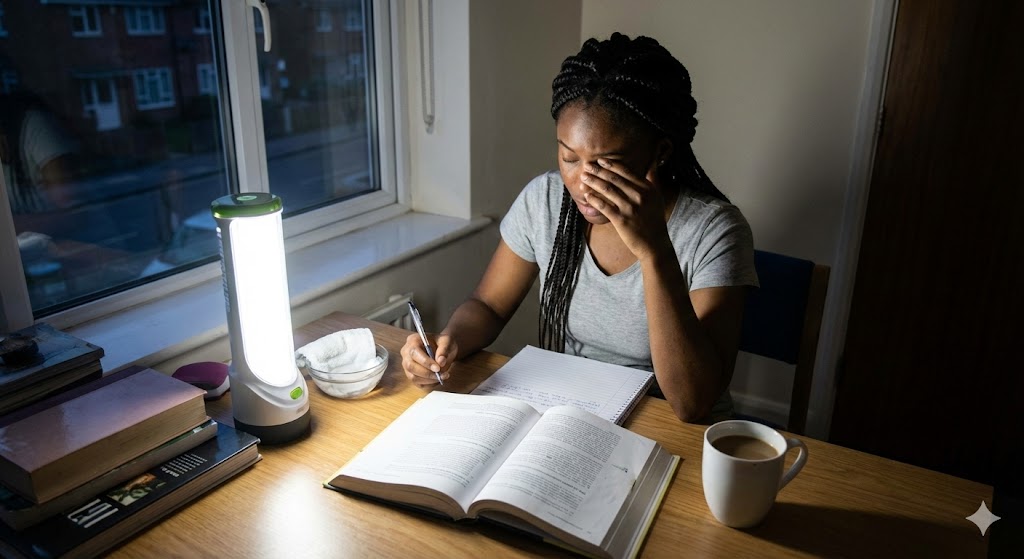
We’ve all been there. You have a massive Chemistry test tomorrow, or maybe JAMB is just around the corner. You promised yourself you would do “TDB” (Till Day Break). You brewed coffee, opened your textbook, and sat down with serious ginger.
Next thing you know, you are waking up at 6 AM with drool on your notebook and a stiff neck.
It is painful.
Falling asleep while studying is one of the biggest frustrations for Nigerian students. You want to read, but your body is screaming for rest. The pressure is real, especially when you check the JAMB website and see how close the exam dates are.
But here is the good news: you can cheat your body’s sleep cycle (at least for a while). Here is how to avoid sleeping while reading at night without turning into a zombie.
1. The “Bed” Trap (Comfort is Your Enemy)
Let’s be honest. Why are you reading on your bed?
You might tell yourself, “I’m just resting my back,” but your brain associates your bed with sleep. The moment you get horizontal and pull that duvet up, it’s game over.
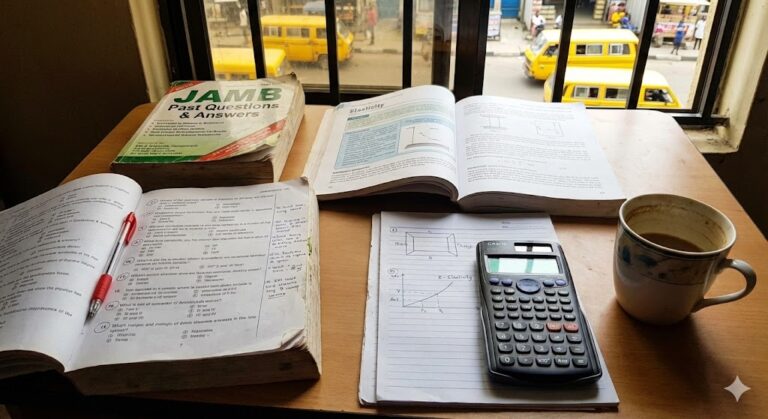
If you are serious about night reading, you need a table and a chair. It doesn’t have to be a fancy library setup. A plastic chair and a small table work fine. The goal is to make your body slightly uncomfortable. That mild discomfort keeps your brain alert. If you are too cozy, you will sleep.
2. Fix Your Lighting (Don’t Blame NEPA)
Reading in dim light is a direct ticket to dreamland.
When the light is low, your eyes strain to focus. This strain makes your eyes heavy, and before you know it, they are closed. I know the power situation in Nigeria can be frustrating. We often rely on candles or those rechargeable lamps that start dimming after one hour.
But you have to invest in good lighting. If you are using a rechargeable lamp, ensure it is fully charged. Bright, white light mimics daylight and tricks your brain into thinking it’s still daytime. According to health reports from The Punch, poor lighting significantly increases eye fatigue, which leads directly to drowsiness.
3. Watch What You Eat (The Heavy Dinner Mistake)
Imagine eating a mountain of Eba with Egusi soup at 9 PM and thinking you will study till 2 AM. You are joking, right?
Heavy carbohydrate meals induce a “food coma.” Your body uses a lot of energy to digest that heavy starch, leaving your brain with nothing. You feel sluggish, heavy, and ready to crash.
If you plan to study at night, eat light. Take tea and bread, noodles, or fruits. Save the heavy swallow for lunch. You need your blood pumping to your brain, not your stomach.
4. Active Reading vs. Passive Staring
Most students fall asleep because they are just staring at the book.
“Passive reading” is when you just move your eyes across the page without doing anything else. It is boring. And when your brain is bored, it shuts down.
Make it active.
-
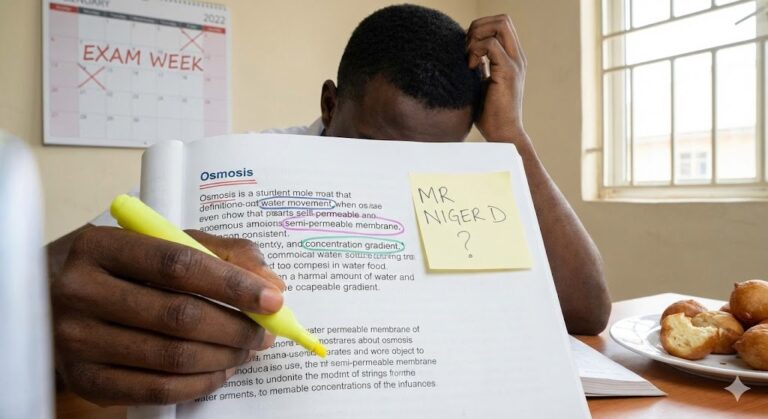
Hold a pen: Underline key points.
-
Jot things down: Summarize paragraphs in a separate notebook.
-
Talk to yourself: Explain the concept out loud like you are teaching a class.
When you move your hands and mouth, it is much harder to fall asleep. This is a technique often encouraged by lecturers at top schools like the University of Ibadan (UI) to improve retention.
5. The Water Therapy Trick
This is one of the oldest tricks in the book, but it works.
Keep a bowl of water or a wet towel next to you. Whenever you feel your eyelids getting heavy, wash your face. The shock of cold water wakes up your nervous system immediately.
Also, drink water. Dehydration causes fatigue. Sip water consistently while you read. It keeps you hydrated and forces you to stand up to use the restroom occasionally—that movement alone breaks the sleep cycle.
6. Take Strategic “Power Naps”
Sometimes, fighting the sleep is a losing battle.
If your eyes are burning and you’ve read the same line five times without understanding it, stop. You are just wasting time.
Set an alarm for 20 minutes and sleep. This is called a power nap. It reboots your brain. But be careful—do not sleep for 2 hours. If you enter deep sleep, you will wake up feeling groggy (what we call “sleep drunkenness”). 20 minutes is the sweet spot.
7. Group Study (The Accountability Factor)
It is harder to sleep when someone is watching you.
If you are in the hostel or have friends nearby, organize a night study group. You don’t even have to talk to each other constantly. Just the presence of other serious students can keep you on your toes.
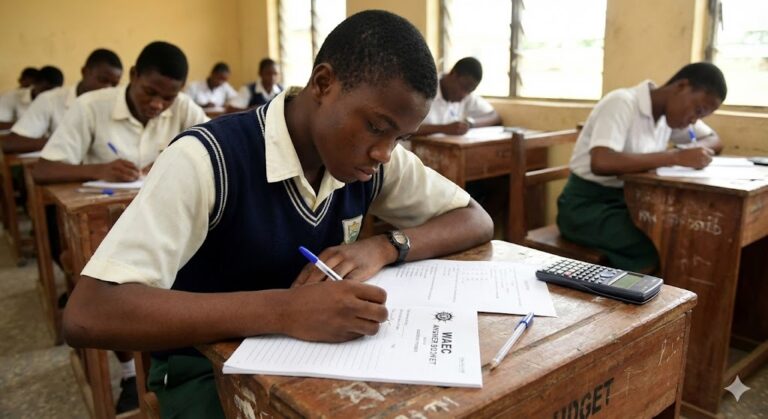
However, choose your partners wisely. Don’t pick friends who will turn the study session into a gist session or a debate about football. You need people who are focused on passing their WAEC exams.
Final Thoughts: It’s About Retention, Not Just Staying Awake
Don’t become obsessed with the clock.
I’ve seen students brag about reading for 10 hours at night, but they can’t remember two pages the next morning. If you are too tired, sleep. A well-rested brain remembers more than a sleep-deprived one.
Try these tips tonight. Get off the bed, turn up the light, and crush those books. You’ve got this!